Custom taxidermy · Peculiar, Missouri
Waterfowl mounts.
When a duck drops into the spread, you’ve got a second to look. Caleb Roseburrough builds custom mounts that let you take in the tilt of a wing and the turn of the head.
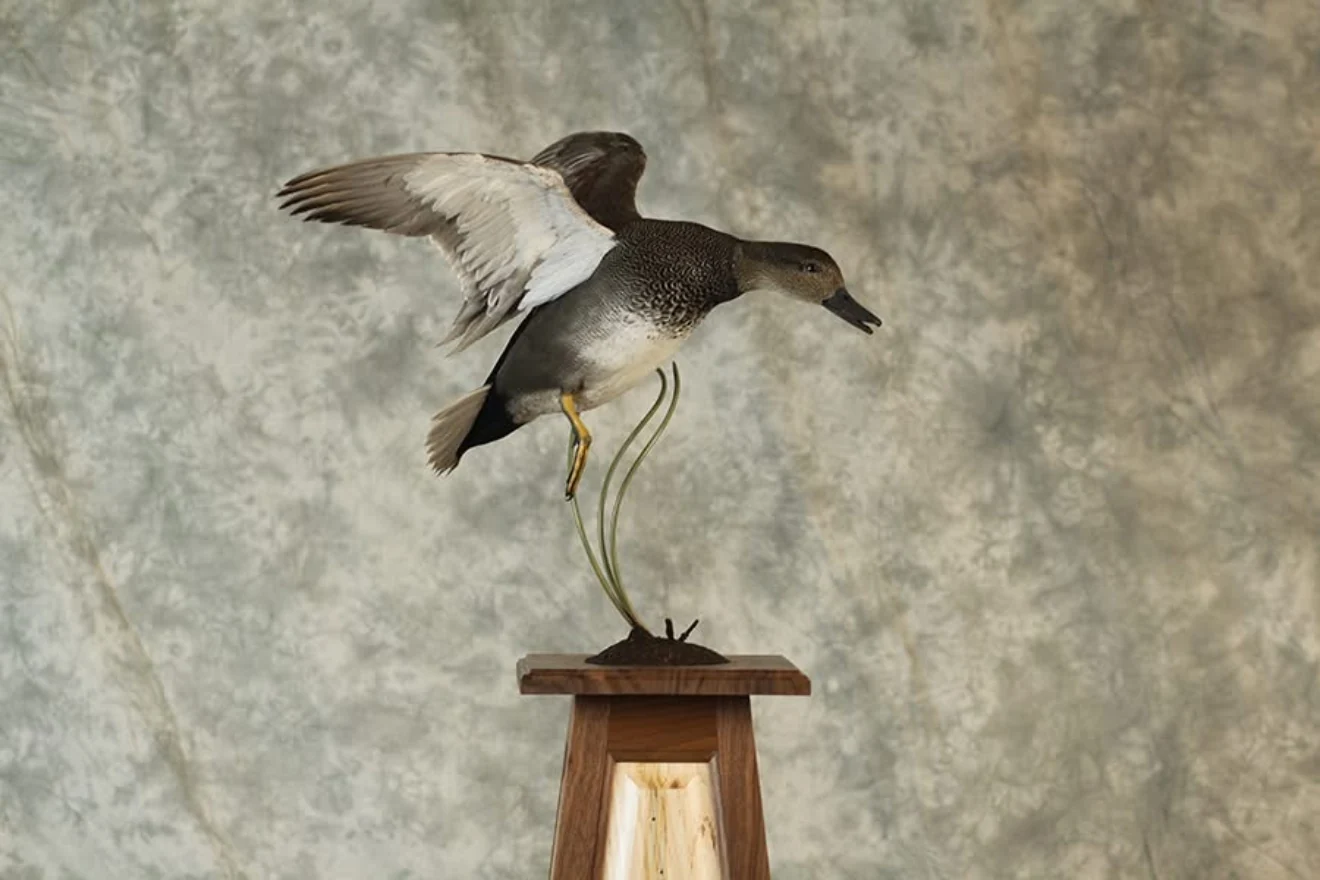
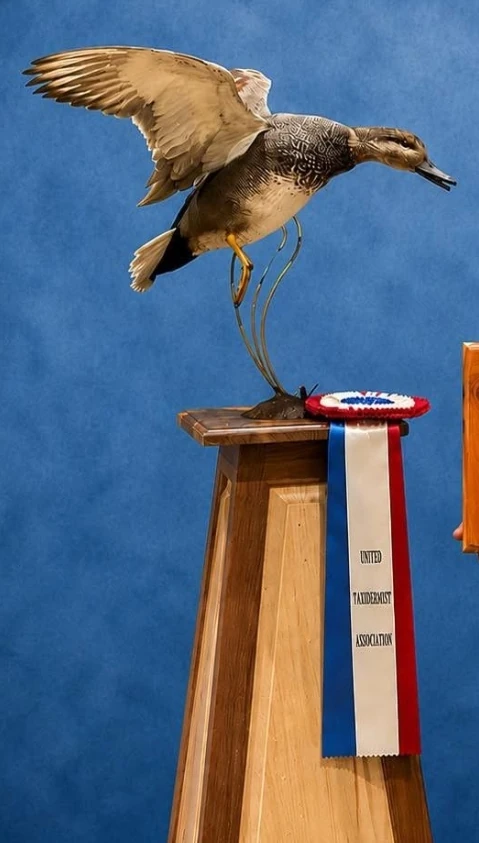
01 The competition piece
One gadwall.
Two firsts.
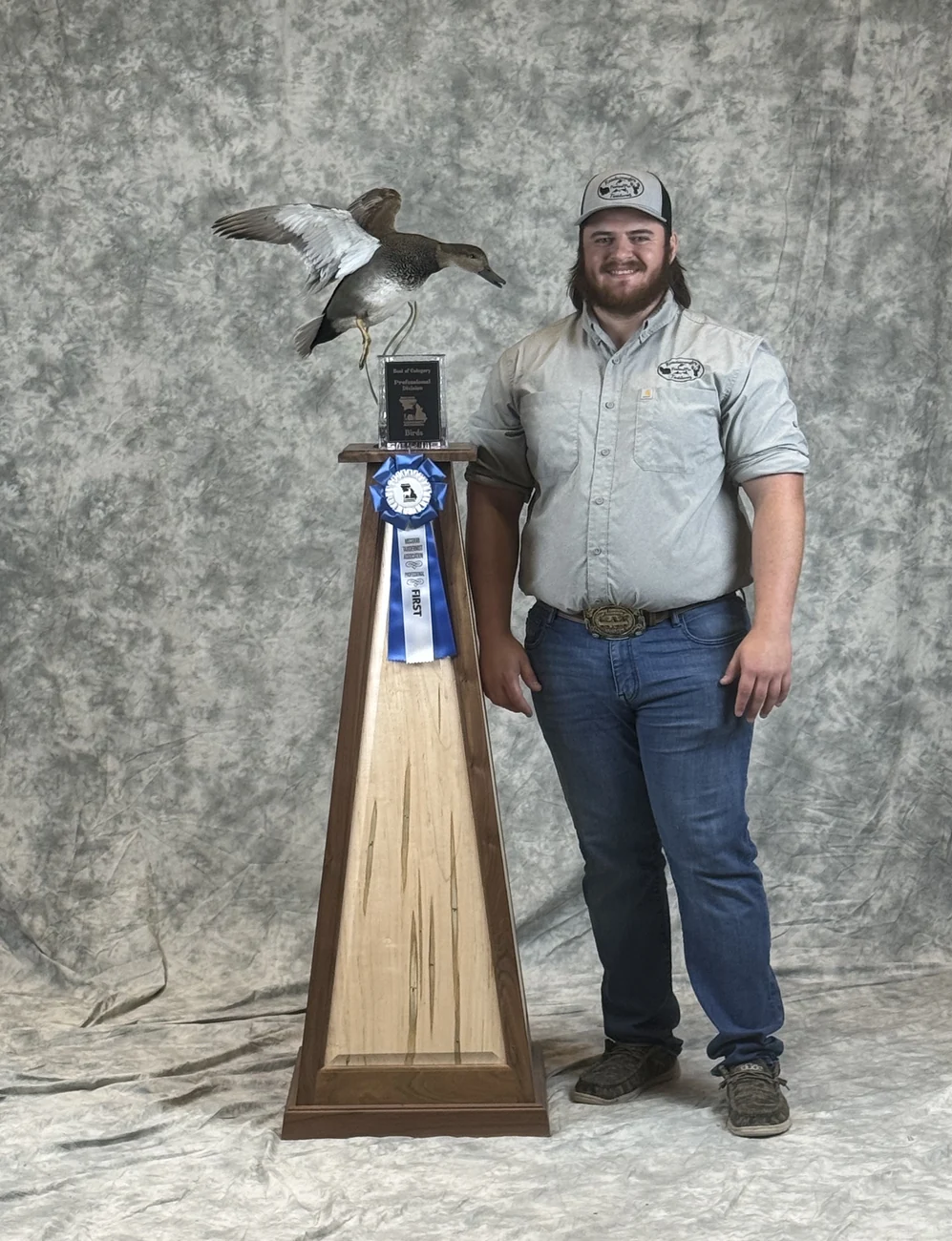
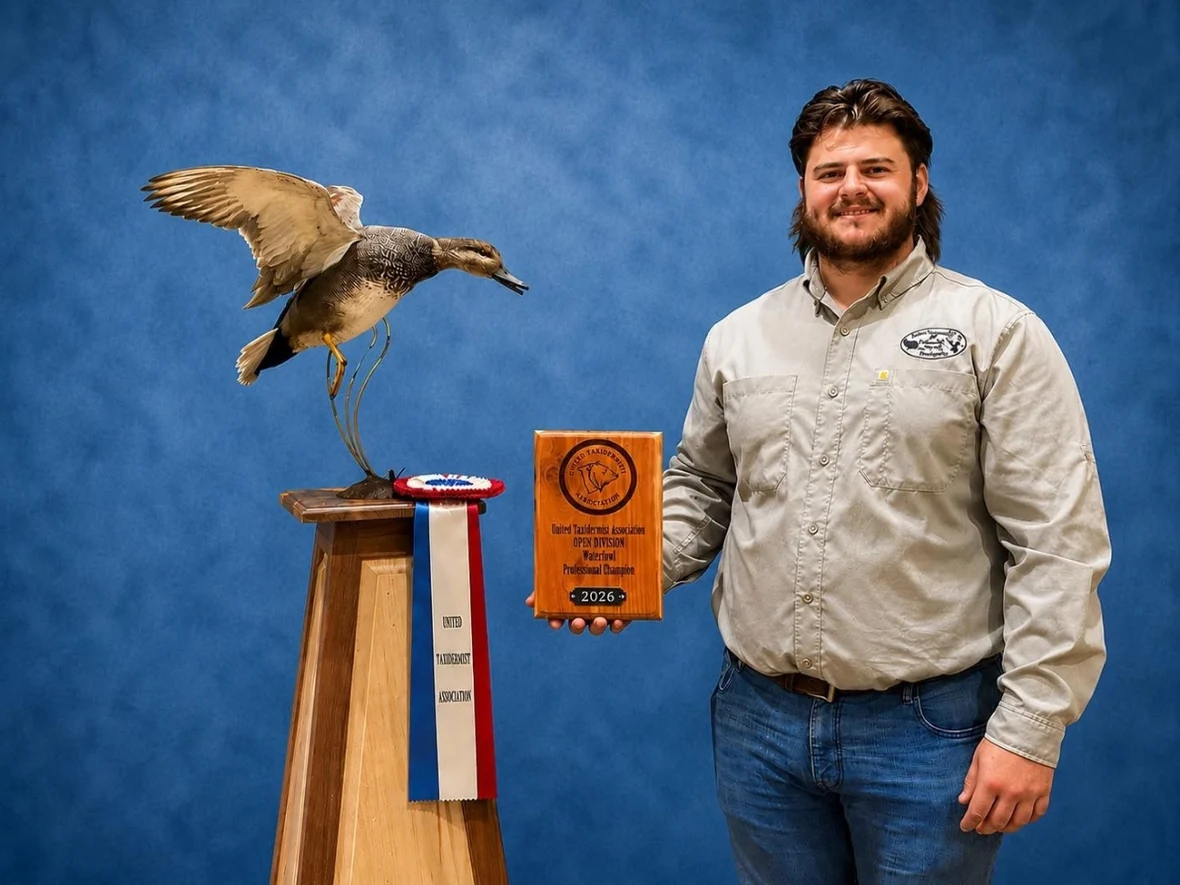
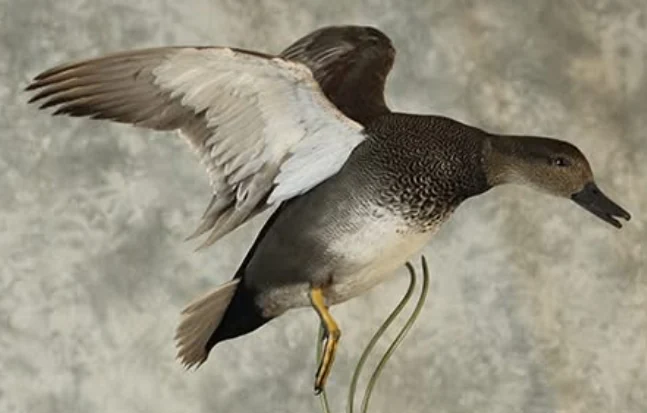
Caleb built this drake for a customer. It went on to earn a first-place ribbon at both competitions.
- 2026 Missouri Taxidermy ShowBest of Category
- Professional Division Birds
- United Taxidermist AssociationWaterfowl International Champion
- Open Division
02 Up close
What makes it look like flight?
Start with the whole silhouette, then look at the wing, the head, and the space between the feet and the base. These close-ups are all from Caleb’s gadwall mount.
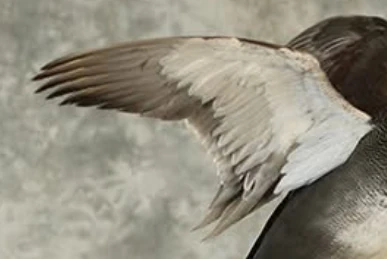
The raised wing
From below, you can see the pale underwing and the darker tips of the long flight feathers. The upward angle gives the wing a clear outline.
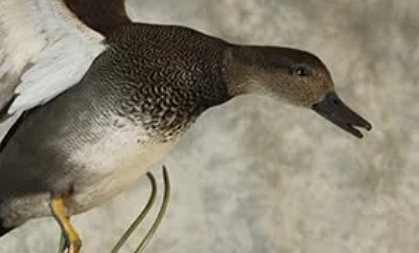
The head and breast
The head reaches forward in the direction of flight. Up close, you can see the fine patterning that gives a male gadwall’s gray-brown plumage its character. Gadwall ID guide
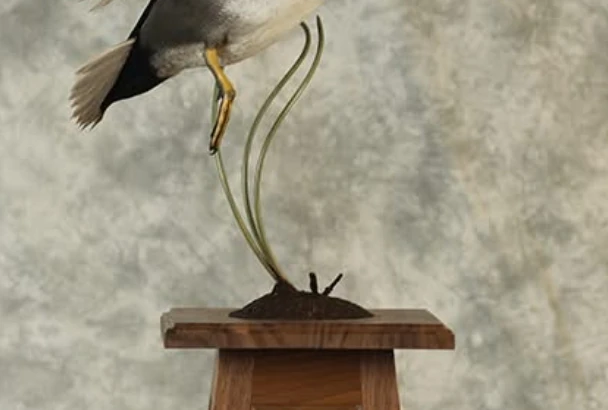
The space underneath
The foot hangs clear of the base. Slender supports leave room around it, so you can see the pose all the way down to the toes.
03 Plan your mount
Pick the moment. Then pick the spot.
A duck with its wings out needs different room than one with its wings folded. Start with how you remember the bird, then show Caleb where you’d like to see it every day.
- 01 / The pose
- In flight, coming down, or at rest? An open wing shows feathers you won’t see on a resting bird. A landing pose draws attention to the feet and wing angle. A quieter pose puts the head and body shape first.
- 02 / The view
- What angle will you see it from? A pedestal can give you views from more than one side. If you’re thinking about a wall or shelf, send a photo and rough measurements so Caleb can talk through wing and depth clearance.
- 03 / The setting
- What do you remember about the water? A photo of the spot can help explain the reeds, timber, or open water you remember. It gives Caleb a starting point if you’re considering habitat work.
04 Caleb’s field notes
Before you bag a duck.
Caleb starts by protecting the head, feet, and feathers. Here’s how he asks you to wrap a duck before drop-off.
Wrap the head and feet.
Use three damp paper towels: one for the head and one for each foot.
Tuck the head and bag it.
Lay the wrapped head on the duck’s back, then slip the bird into a zip-top bag.
Keep the feathers straight.
Handle the duck gently so the wing and tail feathers don’t bend or break.
Can’t drop it off right away? Text Caleb to ask how he wants you to store it. If you see broken or missing feathers, send him a clear photo of the area.
Open the duck field checklist05 Common questions
Before you book.
A few things to know before you hand over your bird and after you bring the mount home.
- PricingWhat goes into a quote?
- Tell Caleb the species and what you’re picturing. The size of the base and the amount of custom habitat work can change the price.
- TimingWhen will it be ready?
- Ask Caleb about his current turnaround before drop-off so you know what to expect for your project.
- PaymentWhen do I pay?
- You’ll put half down and pay the rest at pickup. Caleb accepts cash, check, or Venmo.
- Mount careWhere should I display the finished bird?
- Pick a spot out of direct sunlight. Light can fade feathers over time, and dust can settle into them. Ask Caleb how to clean your mount before brushing the feathers. Mounted specimen care guide
06 Start a commission
What’ve you got in mind?
Text Caleb the species, a photo if you’ve got one, and the pose you’re picturing. He’ll talk through the display and arrange drop-off in Peculiar.